
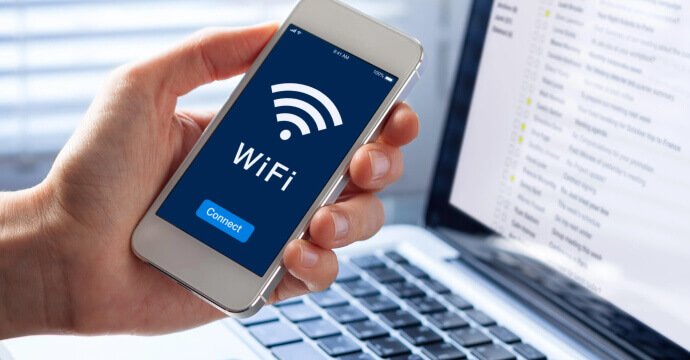
Wi-Fi Signal Receiver Options
Remote control of an air conditioner can be implemented in 2 ways:
-
if it has a built-in Wi-Fi module;
-
an adapter, purchased separately, can be connected to the unit.
In practice, a built-in module is something only manufacturers of very expensive climate-control equipment can boast — a status symbol for a household appliance. The other extreme is affordable Chinese- and Korean-made units, for which a separate Wi-Fi signal receiver has to be purchased.
Most air conditioners come with a Wi-Fi module. For those who have no Wi-Fi at their country house or cottage, an adapter can be purchased for an additional fee. To get this feature, it used to be enough to mount a device resembling an ordinary flash drive on the inside of the panel. Today, many manufacturers provide a dedicated slot that accepts a standard classic flash memory card.
Setting Up Air Conditioner Control over the Internet
Remote air conditioner control makes life easier for users. The feature is simple, easy to set up, and just as easy to operate. All you need is a connected Wi-Fi network, the module itself, and a control app.
The app can be downloaded from the manufacturer's website, whose address is listed in the manual for the climate-control equipment. A link to the app is also provided there as a QR code. For anyone comfortable with electronic gadgets — and that is most people — downloading the app is routine. The app has a simple interface that takes just a couple of minutes to figure out. Those who need help can watch a video on the topic, try configuring the system themselves, or ask specialists for assistance — including those at Sensei.
Initial setup begins with switching on the air conditioner and configuring the Wi-Fi module using the control app. After that you can:
-
change the operating mode of the climate-control equipment;
-
set the desired temperature;
-
adjust the louver system;
-
mute the buzzer on the indoor unit.
And if you forgot to turn off the air conditioner before leaving for work, that, too, can easily be done over the internet.
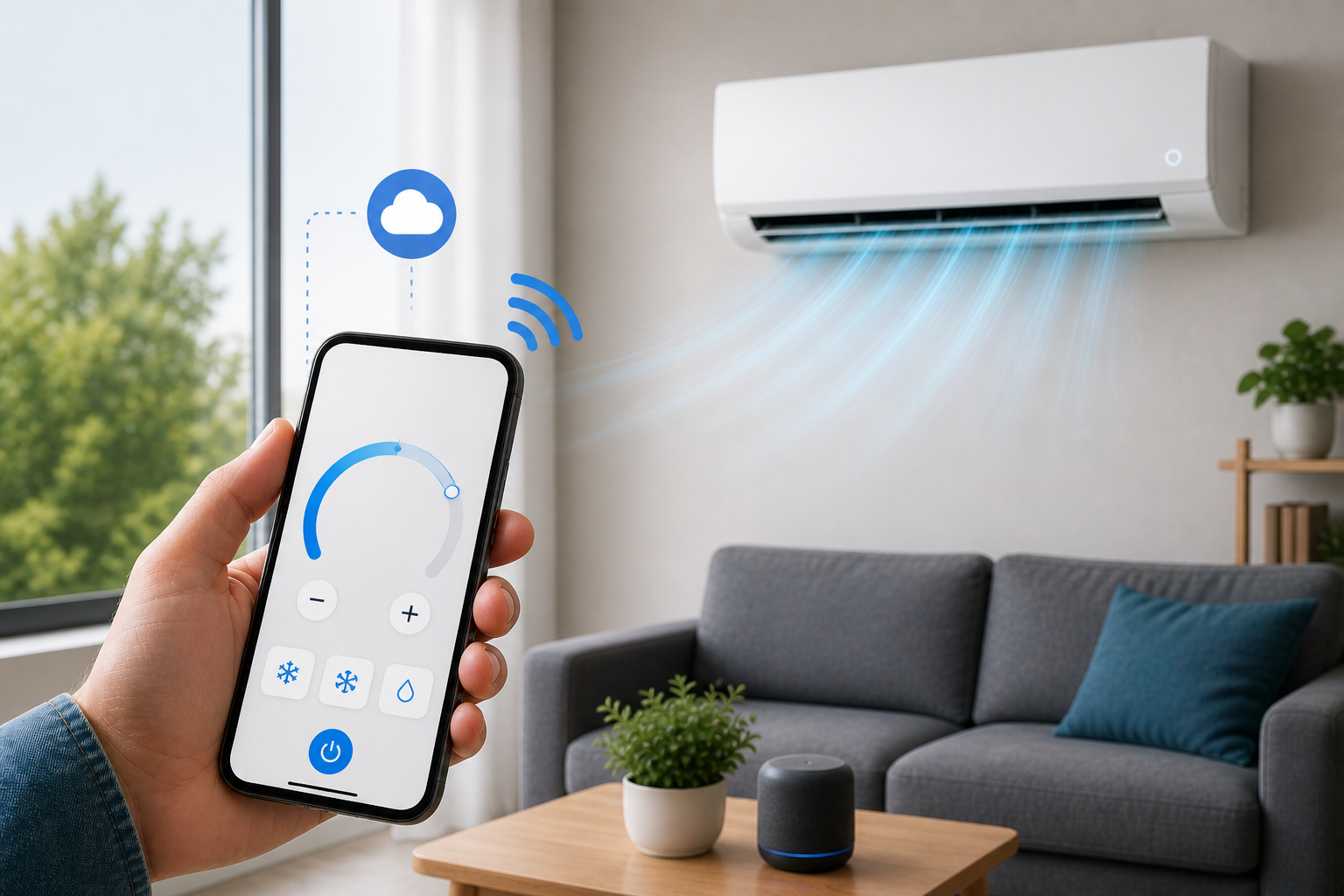
The app screen displays information about the Wi-Fi network and its signal strength, the indoor air temperature and humidity level, the weather forecast for the coming days, and the split system's own operating parameters: the set temperature, louver angle, and fan speed.
Where Remote Control of Climate Equipment Is in Demand
The remote control feature is used especially often in server rooms, where several air conditioners run at once. To keep the servers from overheating, the temperature is monitored around the clock. At night, when no one is in the building and a sensor reports a temperature rise, the only option is to switch on several units remotely over the internet, or to manage the order in which they operate.
Remote climate control is in demand in offices and retail floors, where it ensures comfortable conditions for staff and visitors. The feature is also used at production facilities, in country houses, and in cottages.
The Wi-Fi Module in Sensei Climate-Control Equipment
The latest Sensei inverter air conditioner models — known for their efficiency, reliability, and performance — also feature a built-in Wi-Fi module that lets you remotely control one or several air conditioners. All you need at hand is a tablet, a personal computer connected to the internet, or a smartphone. Even far from home, you can switch the unit on or off, change its operating mode, and set the desired room temperature.
With Wi-Fi technology, the air conditioner can run on a daily or weekly schedule.
With a Wi-Fi module, Sensei climate-control equipment delivers a higher level of comfort and is convenient to use. The Wi-Fi module is available across all Sensei air conditioner series. It lets you monitor power consumption and communicate with your climate-control equipment, saving the user time and resources and improving their working and living conditions.