When should an air conditioner be installed — during or after renovation?
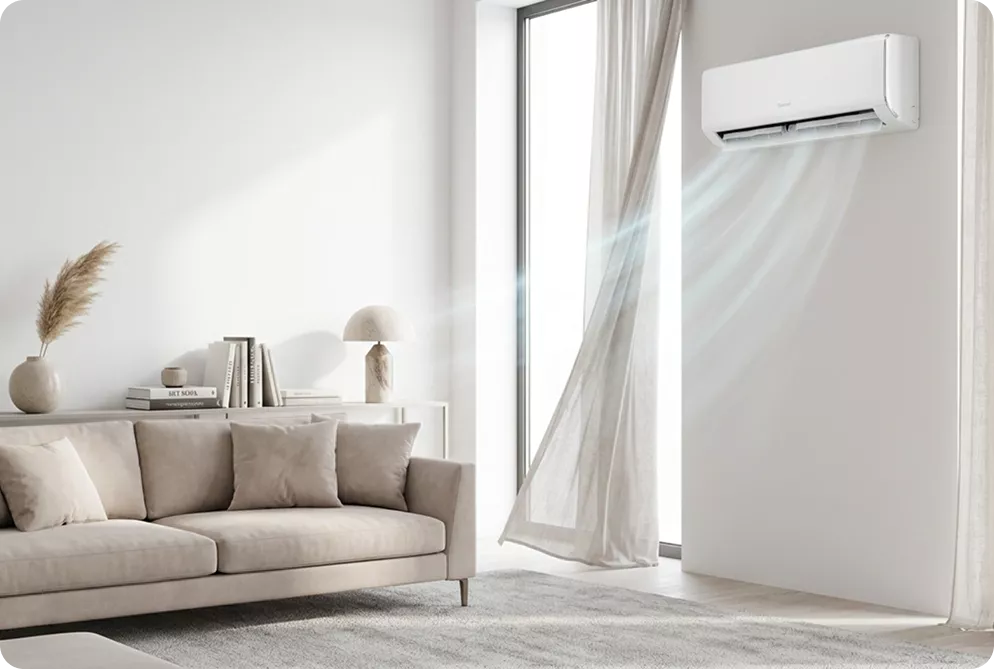
Although modern climate-control equipment is compact, the communication cables and refrigerant lines that come with it can "spoil" a carefully planned interior design.
Installing an air conditioner in an already renovated apartment comes with numerous difficulties.
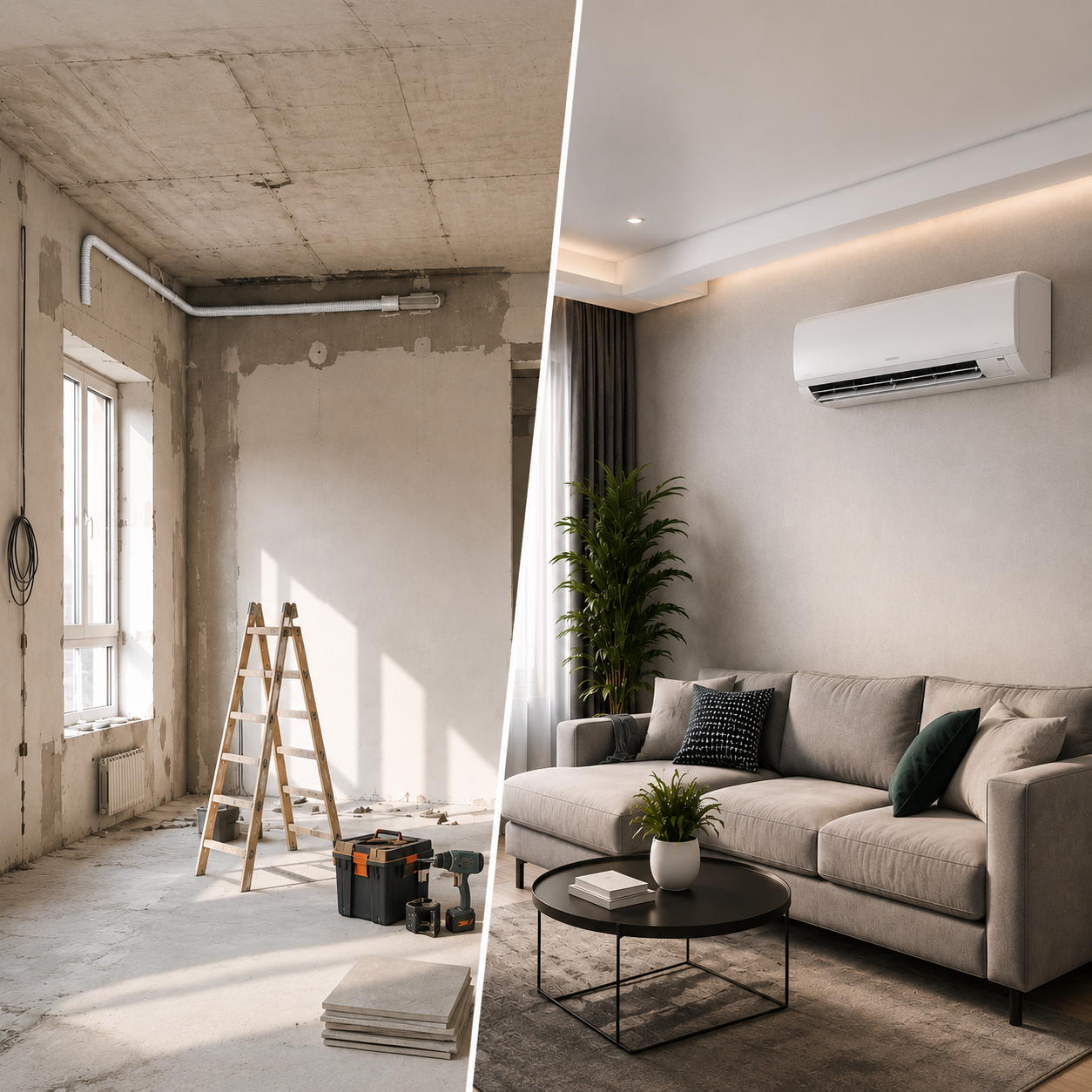
The most popular option is air conditioner installation combined with renovation work. During this period, it is important to run the electrical cable and refrigerant lines and put the necessary embedded fittings in place so as not to damage an expensive renovation.
The Main Stages of Installation
The equipment's location is chosen jointly — by the customer, who decides on convenience and aesthetics, and by SENSEI specialists, who will select the safest and most technically sound option for the room.
The installation process itself includes the following stages:
- boring holes in the walls — drilling and chasing channels;
- installing the outdoor unit;
- running the wiring that connects the two units, along with the refrigerant piping and utility lines;
- installing the drainage system that carries away condensate;
- installing the indoor unit;
- connecting to the power supply, evacuating the system, and starting up the climate system.
Ways to Install an Air Conditioner During Renovation
There are two ways to carry out air conditioner installation work. The outdoor and indoor units can be installed separately. The former is mounted right during the renovation, when the walls are exposed and can easily be chased to run the wiring inside. The indoor unit is then installed once the finishing work is complete.
This installation approach will suit you if you want to:
- conceal the wiring without damaging the wall finish — wallpaper or decorative plaster;
- "work" the equipment's placement into the interior of the renovated room.
Of course, the installation can also be done in a single pass, in parallel with the renovation. In that case, however, you need to weigh all the possible risks sensibly: damage to the indoor unit from construction tools and materials, plus added complications during the finishing work.
Installation After Renovation
It is impossible to foresee everything. If you need to install equipment in a finished room where renovation and finishing work is already complete, SENSEI specialists will ensure the most comfortable and rapid setup of all the communication lines and the air conditioner itself.
Before starting, stock up on protective film to cover furniture, flooring, and other easily soiled interior details. This helps avoid accidental damage and keeps construction dust from settling on surfaces.
One more point — when installing air conditioners after renovation, it is important not to damage the electrical cables hidden beneath the finish. That is why the installation of climate-control equipment is best entrusted to professionals.
It is advisable to select the inter-unit trunking with the color of the decorative wall finish or wallpaper in mind — with a good match, the wiring runs can be visually concealed and the overall style of the room left untouched.
Notes for the User: What to Consider During Installation
Both for you and for the installation crew, the air conditioner installation process can be made significantly easier by clarifying a few important points in advance:
- the requirements the property management company imposes on construction, renovation, and installation work;
- whether a protective canopy is needed over the outdoor unit, as dictated by climate conditions and other environmental factors;
- the list and cost of consumables (copper tubing, thermal insulation, etc.) used during installation;
- aesthetic recommendations for the equipment's placement (while not as high a priority as, say, safety or technical soundness, they still play their part).
Conclusion
Installing split systems is labor-intensive work that demands experience and qualifications from the installer. An installation that fails to meet technical standards can shorten an air conditioner's service life and significantly reduce its efficiency. The choice of installation crew deserves careful attention: it is best to use the specialists from the same company where the climate system was ordered.
SENSEI's professionally trained technicians will not only carry out the installation work to the highest standard but also provide ongoing service and maintenance for your air conditioner.