How an Inverter Air Conditioner Works
Outwardly, inverter models look just like conventional split systems. They likewise consist of an outdoor and an indoor unit. The main components are identical: the outdoor housing contains the compressor, the electronic control board, and so on. The indoor unit houses the air-cooling evaporator, fan, fine and coarse filters, louvers, etc.
The key difference lies in the operating principle. The Japanese engineers behind this know-how moved away from the traditional power-supply scheme. The new power chain works like this: alternating current from the household mains is first converted to direct current, and then back to alternating current — but now with optimized frequency characteristics. To control and adjust the current parameters, the design is supplemented with an advanced control board.
The Difference Between an Inverter and a Conventional Air Conditioner
How does a conventional split system maintain the temperature set by the user? It tracks the current readings with sensors. When the deviation from the set point exceeds a few degrees (typically 4°C or more), the compressor and fan switch on. The system works like a lazy crew sailing the sea in a leaky boat. The sailors wait until the water reaches a threatening level, and only then, straining every muscle, start bailing it out as fast as they can.
Doesn't sound very efficient, does it? Inverter air conditioners work differently.
Advantages of Inverter-Type Air Conditioners
1. Once the desired temperature is set, the unit immediately ramps up to full power (made possible by the variable-speed motor drive).
2. Comfortable living conditions are established in the room in a minimal amount of time.
3. The compressor then switches to a steady, economical operating mode, keeping the temperature from deviating by more than 1 degree.
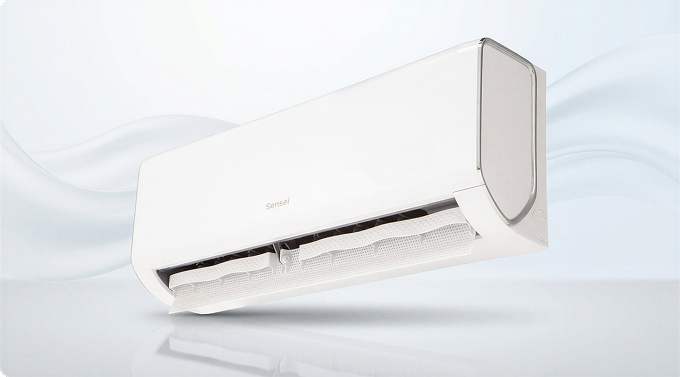
An added bonus of this algorithm is that the unit is never overloaded, which means no excess noise. Maximum noise is no more than 26 decibels. That is why inverter split systems are well suited for children's rooms and bedrooms, studies, and office spaces.
Beyond the obvious benefit of a pleasant temperature maintained steadily, without swings, inverter air conditioners offer these strong advantages:
1. Eco-friendliness. Inverter-type units use a refrigerant that does not deplete the ozone layer (R410A and R32).
2. Gentle operating conditions. This is because the air conditioner quickly reaches the set temperature and then switches to a low-stress operating mode. The set temperature is maintained throughout the day.
3. Effective heating at sub-zero temperatures. The climate-control equipment keeps the room warm at outdoor temperatures as low as -30°C.
4. A “floating” output power range. Air conditioners running in On/Off mode cannot adjust their output power. Why is that bad? If a unit is rated at 4 kW, its cooling capability is limited to exactly those kilowatts.
Inverter units, by contrast, with a nominal rating of, say, 2 kW, can vary the output between 0.5 and 3 kW (depending on the load on the compressor). In other words, the unit delivers exactly as much power as is needed. This largely explains the next feature.
5. Energy efficiency. Sensei specialists are confident: inverter-type units can be 30-40% more energy-efficient than standard models. The economic benefit is quite obvious, especially under the right operating conditions.
The scenarios where the difference in utility bills is felt most strongly are when the split system runs around the clock for private homeowners (well suited to regions with a long hot season).
Sensei experts also recommend that managers and owners of commercial properties — production facilities, shopping centers, business centers, and the like — take a close look at inverter air conditioners.
If you have to pay for electricity at high rates, energy-efficient climate-control systems will be a real lifesaver for the company budget.
Are There Any Drawbacks?
Cost can be considered a relative downside. A conventional air conditioner of identical capacity will be 25-30% cheaper. However, thanks to low energy consumption over long-term use, the investment pays for itself and then starts generating savings!
The service life of modern air conditioning systems is 9-15 years. So with electricity prices constantly rising, is chasing the lowest price really worth it? Given the high quality of Sensei service support and the ready availability of repair parts, it simply makes no sense.