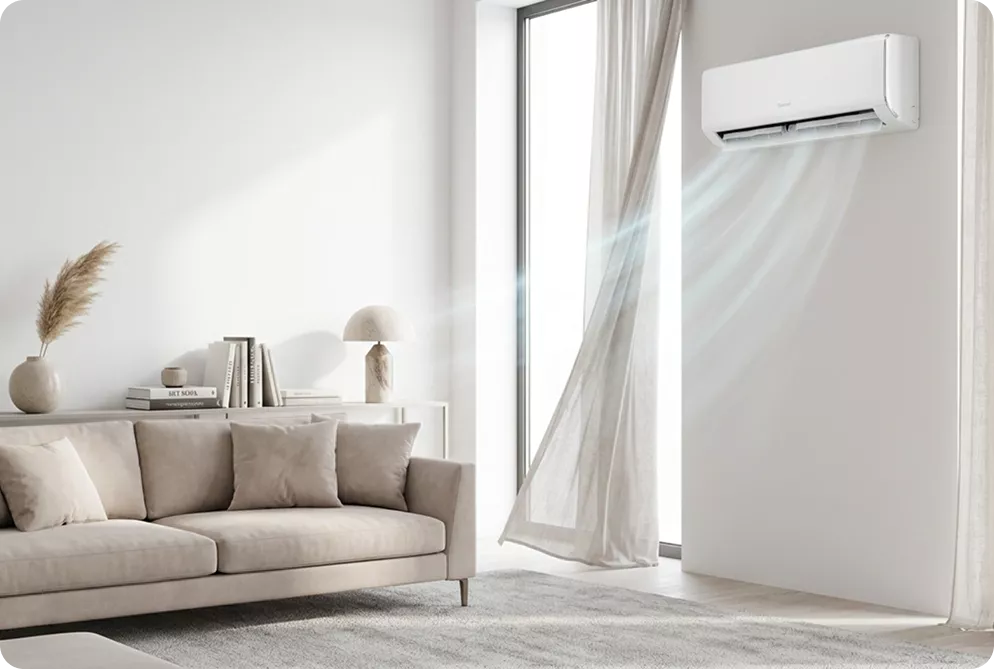
Advanced air conditioner models are equipped with purification systems that rid the air of virtually every kind of impurity, the main ones being:
- tobacco smoke;
- dust;
- poplar fluff;
- mold spores;
- microbes, including pathogenic ones;
- pet hair;
- toxic substances.
Filter quality affects the price of an air conditioner. An expensive all-purpose model is not always the best solution. Sensei recommends choosing a unit based on which types of contamination predominate in each specific case. In damp rooms, removing mold spores will be the priority; in a living room, cleaning the air of dust; on a factory floor, removing toxic substances, and so on.
Coarse Filtration
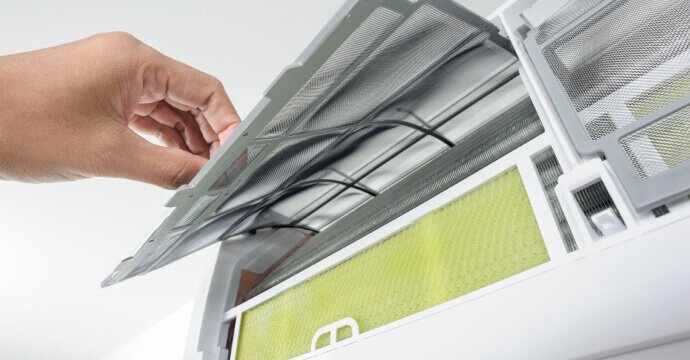
The most important part of the filter set: it works like a sieve, trapping 95% of large dust particles, pet hair, and fluff. It extends the service life of the climate-control equipment and keeps the split system itself from clogging, since dust larger than 2 microns never reaches the heat exchanger.
Mechanical filters themselves require periodic cleaning. Their condition can be checked via a dedicated indicator. On average, it activates once every 2 months, when the filter needs preventive maintenance and cleaning. In modern air conditioners, coarse filters should be cleaned once or twice a year.
Fine Filtration
Filters that remove dust, bacteria, and various impurities down to 1 micron in size can have a carbon or polymer base. Their working mechanisms may include ultraviolet light, plasma technologies, and electrostatic interaction. If a single unit contains several different filters, its price is above average.
Carbon filters. They contain activated carbon. They have a deodorizing effect, as they remove the sources of unpleasant odors. They last up to 5 months. Their longevity depends on a number of factors, chiefly:
- the environmental situation in the region;
- proximity to highways;
- the building's orientation relative to the compass points.
Zeolite filters, based on a porous mineral that is an excellent adsorbent. More effective than carbon filters. They will last up to 5 years, provided they are periodically rinsed with clean water.
Electrostatic filters. Based on the interaction of oppositely charged particles. They have an unlimited service life.
Plasma filters destroy the spatial structure of toxic compounds and the structure of mold fungi and bacteria. They work indefinitely. They eliminate allergens.
Ultraviolet filters with an LED that disinfects the air and destroys viruses and bacteria.
Photocatalytic filters, with titanium dioxide as the catalyst, accelerate the breakdown reactions of hazardous organic matter. They handle both organic and mineral contamination. They work for a long time — as long as the ultraviolet lamp remains functional.
Biofilters deactivate microorganisms. They may be based on:
- Wasabi. Derived from a plant that grows in northern Japan and has bactericidal properties. A wasabi filter traps formaldehyde and neutralizes mites.
- Catechin — a natural antiseptic found in apples and green tea.
Filters containing flavonoids have an antioxidant effect — that is, they destroy free radicals.
Filters with ascorbic acid. Manufacturers claim that vitamin C boosts immunity and improves skin condition. Some experts consider this a marketing ploy aimed at increasing sales of budget air conditioners.
ULTRA Hi Density
A new-generation filter that removes more than 90% of contaminants from the air, including dust, pathogenic microbes, and toxic molecules. It features micro-cells for higher-quality air purification. This multilayer filter with a special coating, built with the latest technologies, handles allergens and various organic compounds. It is found in the most advanced climate-control models from the leading manufacturers.